test
Posted on

Sponsor Spotlight: Pretty Little Yarns

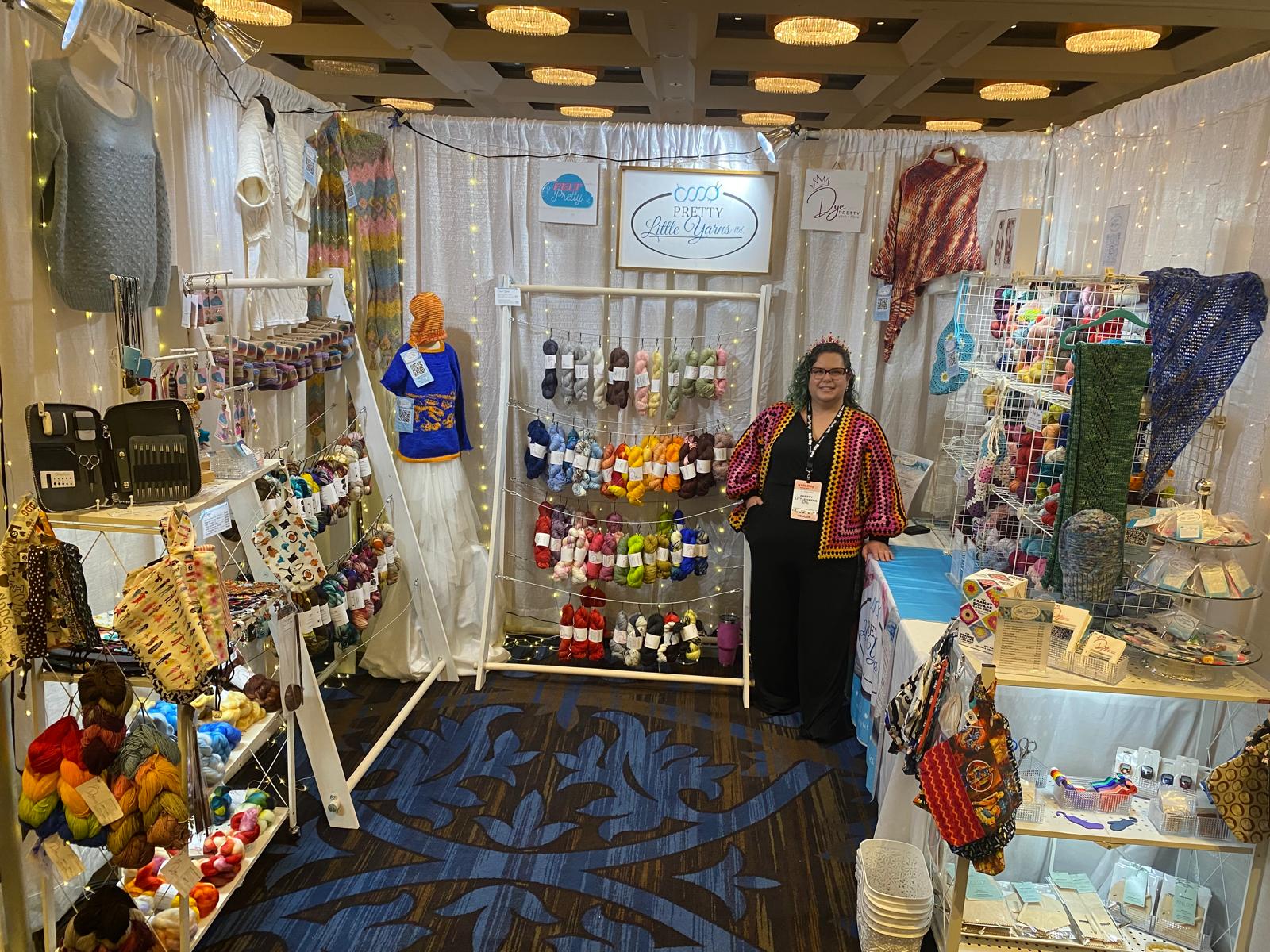
For our first sponsor spotlight of the year, we’ve asked Marisa Veri of Pretty Little Yarns to choose 5 questions to answer so we can learn more about her family-run yarn business and her passion for the local GTA fibre community.

Tell us about your team.

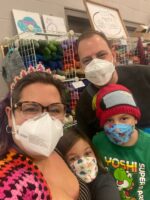
My team is extremely small, in fact, some may think it is only me.  Truth be told, it mostly is, but I would be remiss if I didn’t recognize the part my family plays in making this business work.  Like many yarn and fibre businesses, Pretty Little Yarns Ltd. is truly a family business.  My husband, Andrew, attends almost every show with me, helps load and unload the product, and is often responsible for late night skeining while I frantically label my wares.  My little boys are a bit bigger than when I began this, and they have taken to helping at shows with unloading, setting up, running the cash, and chatting to the customers – they have even tried their hand at dyeing!  Even though for the most part I am a one-woman show, I’m really fortunate to have these people supporting my dreams and helping make the magic possible.

How does your community contribute to your business?

I find the Canadian fibre community in general to be such a massive part of both my life and my business, it is almost impossible to imagine things without it. I aim to be at as many fibre festivals as possible throughout the year, and at those events there are customers and other vendors who have watched my business and my family grow up. People who notice the new products that I’m excited about, or who show me what they made with their last purchase or ask about my children. It’s all those points of connection that really fuel my involvement in this industry. There is such a strong collaborative dyer community in Ontario where many of us shop owners and dyers work together on various projects, host pop ups together, share opportunities and generally support one another. In a world of cutthroat entrepreneurialism, it is a really refreshing business to be in

What do people never ask you, but you wish they would?

I wish that more people would ask me about colour choices. I have a really strong background in colour theory from my days as an Interior Designer, but it is just one of those skills that has come really naturally to me my whole life. Colour is my JAM! So when people come to my booth agonizing over choosing the right shade for their project, I’m always bursting with wanting to help. Please never be shy if you see me at a show, ask for help if you need it. For online orders, you can always email or DM me with colour questions and I can give suggestions and take photos of different yarns together for you or even set up a video call.

Do you knit English or Continental or some other way?

I can do both. I’ll use the English style when casting on (I usually use the Cable Knit cast on), but then Continental for actual knitting.

What project are you dreaming about doing next?

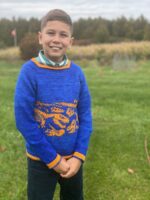
Over the summer I completed a Fossil Frenzy Tee Jr for my oldest son. With fingering weight stranded colourwork and ladderback jacquard for float management, it was truly a labour of love. Now, of course, my second son wants his very own hand-made, hand-dyed sweater, so I have been working on the planning stages of his masterpiece. He would like a black sweater with red, yellow, and orange flames licking up from the hem and the sleeve cuffs. I would like a DK or heavier weight yarn and stranded colourwork rather than intarsia so that the project isn’t quite as time consuming. This perfect pattern does not exist, (or if it does, please email me a link and I will reward you in yarn!) For this project the dreaming is a big aspect. I have found some charts for flames that may work, and I intend to dye the colours up myself. The major sticking point is choosing what plain sweater pattern to superimpose this onto – so far, I’m thinking Strange Brew by Tin Can Knits might be the way forward. I am really looking forward to getting it on my needles though. It is going to be such an amazing passion project.

Fossil Frenzy Tee Jr.

What are some new and upcoming things our membership should be on the lookout for at your shop?

With the “show season” coming to a close, it might look like not a lot is happening when you check out our social media. In fact, during this quieter time of year where I normally hunker down and do all of the administrative catch up and planning for next year, I intend to do a full website overhaul. Please keep your eyes peeled for our announcement of when that is completed. I intend to launch it in February, ahead of the show season. Speaking of which, you can also keep a lookout for our 2026 show season line up, but for now I can tell you that next year promises to be our busiest yet! The season will kick off in March, and we already have spots confirmed at five festivals before the first half of the year is through. I want to do more frequent LYS pop ups in 2026 as well, to bring my yarn within squishing distance between shows. Online or in person, you’ll be able to check us out all year long!


Family at Woolstock 2024


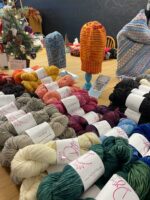
Stix Trunk Show 2025


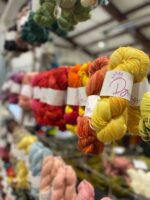
Tiara Sock 2025


Don’t forget to visit our membership hub to see the discount that Pretty Little Yarns offers TKG members!

Posted on

Member Spotlight: Jill Hoffman

This month’s member spotlight features Jill Hoffman, a new member of the TKG. Read on to get to know her better.

How long have you been a member of the Toronto Knitters Guild? What prompted you to join? What is it that the Guild satisfies for you?

I joined in September 2025. I recently relocated to Toronto, and was introduced to a member, via a friend, who recommended joining. I joined to make new friends and get a sense of community. The Guild is doing both of those.

Tell us about when and how you came to be a knitter.  Do you have ancestors or relatives who introduced you to knitting?

I’ve always been crafty, with cross-stitch being my first craft around age 12, and then needlepoint and latch hook. I recall trying knitting as a teenager, doing a big garter stitch scarf in pink and grey. However, I really took it up when I was pregnant with my first son over 20 years ago. My sister-in-law is a big crafter and she taught me to knit and crochet. My first projects were toys, as I was living in the tropics, and had no need for knit clothing.
I took up sewing during COVID

Do you feel you have an aptitude for knitting? If so, what skills/abilities come naturally to you—mathematical computation, spatial abilities, hand-eye coordination, ambidexterity…? Is there anything you struggle with? If so, how do you deal with that challenge?

I  guess my special aptitude is to be able to sit and do the same thing over and over again and not be bored. I now can’t sit and watch TV without doing a craft.

Do you knit English or Continental or some other way?

I can do both. I’ll use the English style when casting on (I usually use the Cable Knit cast on), but then Continental for actual knitting.

Do you accept the proposition that knitting is about “mindfulness”?

I’m not sure – I’m always multitasking when knitting, watching TV, riding in the car, talking with people. So I rarely focus solely on the knitting, unless I’m having an issue with the knitting. However, I do know I go a bit squirrelly if I go too long without doing any crafting.

Tell us how you go about establishing gauge when you knit? Or is gauge something you even care about?

I do gauge for when knitting clothing only. I don’t bother for toys or blankets. I usually get gauge if knitting the same yarn and needle size, but it’s always good to check. I will also wash and block the gauge square.

Which weights and fibres do you most like to knit with? What kinds of things do you knit, i.e. hats, scarves, garments, toys…?

When the kids were younger, I did a lot of toys. My signature baby gift is a knit baby ball with a bell inside, I’ve probably made close to 50 of those over the years. My eldest son received the first one, and started crawling chasing it. As I did mostly toys, my stash is a lot of acrylic.

I recently knit with boucle, and did not like knitting it at all, but I do have to say, it looks pretty good done. I am going to attempt mohair next

What knitted item are you most proud of? What did you learn while working on it?

I don’t really have a knitting item I’m most proud of (I do for cross-stitch and sewing). I do have some knit favourites, including some of the toys made. As those were the early days of knitting, I learned a lot, such as increases, decreases and intarsia.

What is your day job? How, if all, does knitting fit with that?

I’m an actuary and an auditor. Both require a level of attention to detail and to be able to sit and do tasks, that some would consider boring. However, there can be a similar thrill to getting a spreadsheet fixed and working as you get when you figure out what is happening in a pattern.

Have you ever injured yourself knitting?

No. Sewing and cross-stitch – yes. The needles are much pointier there!

Do you consider yourself to be a process knitter or a product knitter?

Both I would say. I’m able to make gifts and give them away, so that isn’t as “product” focused. However, I do love wearing the stuff that I make and take a lot of pride in it.

Do you have a favourite stitch pattern? If so, what do you like about it?

INo. However, I do like the effects that you get when you slip a stitch. I’ve done a few blanket patterns with that as the motif, and I like the look of that.

Signature baby ball. I can’t recall where the pattern is from, and stash busting yarn.


Pattern: Park Avenue Cardigan from Kelly Montag designs. I added a button band on the inside and outside and added a zipper.
Yarn: Berroco Vintage DK in Cracked Pepper purchased online from Art of Yarn.
I’m getting a lot of wear out of it.


Posted on

Knitter, Beware!

By Genevieve Chornenki

“Not allowed!”

The airport screening officer in São Miguel (population 140,000) pointed to knitting needles in my clear, Ziplock bag. “Not allowed.”

“But I just flew across the Atlantic,” I said, “Six hours, and I knit with the bag in full view most of the way.”

I was working on a top-down sweater of drop-spindle Alpaca yarn from Peru. My work and knitting tools, including extra circulars, had made it through security in Toronto, Canada, no questions asked. As is my practice, I had placed the project in a clear bag on the conveyor belt at security and displayed it like carry-on toiletries and liquids—in the open.

The São Miguel screening officer gestured to a uniformed supervisor who hurried over. “Not allowed,” she echoed, taking hold of two 4.5 mm circulars—a 24-inch ChiaoGoo Red Lace set and an Adi Click set on a 12-inch cable.

I was about to board a small plane in Ponto Delgado for a half-hour flight to the island of Pico (population 14,000) and was, apparently, too armed and dangerous to be a passenger. But, there was nothing to be done. I surrendered the needles and stuffed the rest of my knitting back into my carry-on, relieved that the sweater itself—on 3 inch wooden Lykke needles—had not been disturbed.

Three weeks later for the first half-hour flight en route home—from an airport smaller than the one in Kenora, Ontario—I made sure that my carry-on luggage contained no metal knitting needles. But airport security in the Azores was not yet done with me.

“Not allowed.”

This time the airport screening officer pulled a 3.25 mm metal crochet hook out of the clear bag. Like many knitters, I use a crochet hook to correct mistakes, and the smaller the hook, the better.

“Not allowed!”

“Oh, come off it,” I said. “This doesn’t even have a point on it.”  I pushed the tip into my index finger to demonstrate.

A uniformed supervisor then appeared. She wagged her finger and shook her head. “Not allowed,” she repeated.

“This is getting ridiculous,” I said.

Meanwhile, the first security officer discovered a small pair of folding scissors. He opened and closed them. Satisfied that they weren’t as threatening as a crochet hook, he put them down and began pulling the in-progress sweater out of the bag.

“Hey, take care!”

Both officers ignored me. At the bottom of the bag they simultaneously spotted a darning needle threaded with bright red yarn.

“Not allowed!”

I yanked out the red yarn, and handed over the needle.

“Have it your way,” I said.

Posted on

Member Spotlight: Kim Hume

Kim Hume at an old phone booth

This month’s member spotlight focuses on Kim Hume, who many of you may have seen as our official photographer at in-person meetings, but probably don’t know much about. Read on to get to know her better.

How long have you been a member of the Toronto Knitters Guild? What prompted you to join? What is it that the Guild satisfies for you?

I’ve been a member for at least 15 years. I’ve been involved regularly since at least since 2009, as that’s the year I went on the TTC Knitalong and met Yun Kang, and we’ve been knitting pals and TKG folks since then.

I joined the Guild to hear and learn from the speakers each month, but it quickly became about the friendships and community. Before the pandemic, a group of us met for dinner before the meetings, and then once we had to be at home, we began meeting weekly over Zoom, and that has continued to this day.

The Guild is great for sharing and inspiring – from the speakers to the other Guild members, there’s always something new I want to make or learn more about

Tell us about when and how you came to be a knitter.  Do you have ancestors or relatives who introduced you to knitting?

I don’t remember the order of things, but I learned to knit in what used to be Brownies, the precursor to Girl Guides. I also learned from my aunt and my mother. My aunt was always knitting scratchy socks and she gave me a Patons booklet on how to knit that I still have, and following along with that, I learned increases, decreases and new stitches. 

A neighbour’s grandmother from Newfoundland showed me how to cable when I was still in grade school, and from there, I figured things out.

Do you feel you have an aptitude for knitting? If so, what skills/abilities come naturally to you—mathematical computation, spatial abilities, hand-eye coordination, ambidexterity…? Is there anything you struggle with? If so, how do you deal with that challenge?

I think I am a process knitter – I see things that look complicated, and I want to know how they are done. That is definitely what led me to crochet – I came across a knitting pattern I wanted to make that stumped me from the start: “begin with a crochet start.” I didn’t know how to do that, so I had to learn.

I’ve made many garments that didn’t fit, that I’ve ripped all the way out to start over – sometimes multiple times. So I’m not afraid to work on things and figure things out. 

I love learning about colour and texture and combining things. 

I used to teach crochet at the Knit Café and at our own Knitters’ Frolic. I’m currently teaching knitting to colleagues at work. We’re on our fourth session of once-a-week lunch lessons, and we have new beginners joining us every week. Now that a few of them are comfortable knitting, they can help each other, which is so lovely to witness.

Do you knit English or Continental or some other way?

I am a thrower, but I can knit continental, especially because crochet uses continental where the yarn is held in the opposite hand from the crochet hook, and the hook swivels around to catch the yarn. I use Continental when I’m doing colour work because it’s so much neater and the different yarns don’t get twisted.

Do you accept the proposition that knitting is about “mindfulness”?

Absolutely knitting is mindful. We just had Sally Melville come and speak to us about creativity, and how the repetitive aspect is good for the brain while also reducing stress.

What is the biggest improvement you have seen in your knitting over the last 5 years? How did that improvement come about?

I am now comfortable transposing patterns to my own gauge. It means I don’t have to find a pattern that works exactly with whatever yarn I’ve decided to knit with. It’s very freeing. The improvement came through trial and error and recognizing when the joy is there and when it’s not.

If you are producing a fabric that gives you joy – with the colour, fibre and texture that’s working – it makes all the difference.

Tell us how you go about establishing gauge when you knit? Or is gauge something you even care about?

I do gauge swatches because I like to make garments that fit. I’ve learned a lot about gauge recently by re-knitting garments I wasn’t happy with, either because the gauge was wrong for the project, or I didn’t like the structure of the fabric I got when I adjusted the needle size to get gauge. 

I try to find the needle size that works with the yarn first. I want the fabric to hold together well. If the knitting is too loose, the garment will stretch. So I go down in needle size until I have what works with the yarn. Then I do a swatch and measure out my gauge, and I adjust that to work with the stitches in the pattern that works for my size.

Which weights and fibres do you most like to knit with? What kinds of things do you knit, i.e. hats, scarves, garments, toys…?

I work with all weights – from lace to bulky. I think I like fingering best, but I will work with anything. 

I’ve been making a lot of blankets with yarn I’ve inherited, and those I like to crochet because it goes faster and the fabric is thicker and reversible. 

I also make tops and sweaters, but most of my stash is not a sweater quantity so I have to combine yarns.
I’m also making baby socks for friends and colleagues who are expecting little ones. 

What knitted item are you most proud of? What did you learn while working on it?

That will be whatever project I haven’t started yet and what I learned making mistakes while making it!

What is your day job? How, if all, does knitting fit with that?

I work for a union in communications. Knitting fits with it because I’ve discovered there are many other crafters where I work. I’ve also finally started teaching knitting at work once a week during lunch.

Have you ever injured yourself knitting?

When I’m knitting with really fine yarn and sharp needles, my left index finger gets sore from pushing the tip back through. I don’t mind, though.

Do you consider yourself to be a process knitter or a product knitter?

I am both, but more a process knitter. I don’t have any trouble taking something out and knitting it again if it didn’t turn out the way I wanted, because it’s all time spent knitting. People ask me “how long did that take you?” and I answer that first of all, I don’t know; and secondly, that it doesn’t matter, because I enjoy doing it, and it takes as long as it takes.

Do you have a favourite stitch pattern? If so, what do you like about it?

I like to try new stitch patterns all the time. I use a spiked crochet stitch in my favourite linen dishcloth pattern. I discovered this by knitting and crocheting a whole bunch of the free Knit Picks dishcloths. Crochet dishcloths hold together much better than knitted dishcloths. And making them with linen makes them antibacterial. See this free pattern. I add a border to it. https://www.knitpicks.com/sloped-lines-dishcloth/p/55553

A recent purple linen knit dishcloth with a dark contrasting border


Mugo in a crochet blanket:
Mugo in a crochet blanket.


Kim Hume in a Brambleberry Cowl


Surely sweater by Yellowcosmo (Connie Peng)
Surely sweater by Yellowcosmo (Connie Peng), made using yarn from Mary Pat McDonald, which the designer chose to feature on their pattern page. https://www.ravelry.com/projects/ideasdept/surely
Posted on

Knit on the Tips!

By Twisted Cord

Look at these two raw swatches—same yarn, same needles. Same knitter? You wouldn’t think so. Even in an unblocked state, swatch A is superior to B. A’s stitches are more or less regular. By contrast, B’s stitches look like the hind end of a dog, with many more distorted and split stitches.

Swatch A
Swatch B

The yarn—a mystery picked up at Steeped Skeins—is a very low-twist, slippery, 100% viscose yarn that snags and splits with ease. Blocking remedies some of the issues, but not all.

close up of the unknit yarn

How to manage such yarn? Not by changing needles: four different makes and models made no difference, whether the tips were pointed or blunt. But knitters who have taken Suzanne Bryan’s knitting bootcamp will remember her injunction and will know—knit on the tips. That’s what this yarn called for. When the knitter deliberately knit with the tips of the needles (in the case of these swatches (a Lykke Indigo 4 mm circular), the number of split and distorted stitches was reduced – swatch A was knit on the tips!

Posted on

Member Spotlight: Mamie Armaly

Mamie wearing Lento by Jonna Helin

For our first Member Spotlight of the 2025-2026 Guild Year, we’d like to introduce you to Mamie Armaly, a longstanding TKG member so that you can get to know her better.

How long have you been a member of the Toronto Knitters Guild? What is it that the Guild satisfies for you?

I have been a member since 2017.  Being a member of the Guild lets me be part of a knitting community, and gives me social connection, learning and inspiration.

Tell us about when and how you came to be a knitter.  Do you have ancestors or relatives who introduced you to knitting?

When I was 8 or 9 years old, my maternal grandma taught me long tail cast on, and knit and purl stitches using long 2 mm dpns she brought with her from Hong Kong.  I knitted mostly swatches for a couple of years, and knitting was squeaky and difficult.

I did not enjoy knitting until I met my mother-in-law in my early 20s.  she was an avid knitter and an inspiration to knitting my first sweater.

Do you feel you have an aptitude for knitting?

Knitting didn’t come naturally for me.  I had trouble understanding patterns.

“Back in the day”, the staff at the Yarn Mill (no longer around) where I bought yarn by the weight, were helpful and I enrolled in a ten-week knitting class.  I’m a hands-on visual learner.  My mother-in-law and I lived in different cities so getting together to knit and learn was not an option.  Telephone calls then were very expensive.  Much learning came from constantly knitting and frogging.

Today, with the availability of the internet, YouTube, and knitting communities, challenges are dealt with easily.

Do you knit English or Continental or some other way?

English

Do you accept the proposition that knitting is about “mindfulness”?

Yes, and making something with my hands.

Paying attention to my knitting, the hand movement, the stitches, the feel of the yarn, sound of the needles, being in the moment – helps with focus, learning and brings about relaxation and enjoyment.  The result of a finished object brings me great satisfaction.

What is the biggest improvement you have seen in your knitting over the last 5 years? How did that improvement come about?

I have gained confidence in tackling new techniques and patterns, and started knitting socks and sweaters.

These improvements were possible through the availability of knitting classes offered on-line and in person, and from inspiration from fellow knitters.  I was also inspired by attending knitting retreats and festivals.

Tell us how you go about establishing gauge when you knit? Or is gauge something you even care about?

I knit a gauge swatch for most projects even when I don’t want to.  I aim to have my finished objects wearable.

Often, I have to knit several swatches using different sizes of needles.  I generally have to go down a needle size.  For socks, 2 mm needles and fingering yarn turn out a pair of well-fitting socks.

Which weights and fibres do you most like to knit with? What kinds of things do you knit?

Fingering weight and all natural fibres are my favourite to knit with.  I mostly knit sweaters, socks, neckwear and hats.

What knitted item are you most proud of? What did you learn while working on it?

The Winter Beach Cardi by Andrew Mowry.  I learned  to knit an all cable / texture cardigan, and perseverance.

What is your day job? How, if all, does knitting fit with that?

I’m retired!  I have more time to knit but find that I still have to carve out time to sit and knit given daily living activities and other pursuits.

Have you ever injured yourself knitting?

I had repetitive strain injury in my shoulder that prevented me from knitting for years and I just stopped knitting until about 10 years ago.

Do you consider yourself to be a process knitter or a product knitter?

Both!  I enjoy the process of casting on a project, making it and knitting to have a finishing project.

Do you have a favourite stitch pattern? If so, what do you like about it?

No favourite, although stocking stitch is the most frequently used.  I do enjoy learning new stitch patterns.

Sol Top by Mochiknits, knit in a cream coloured yarn
A recent FO, Sol Top by Mochiknits


Current WIP, Salty Air Tee by Samantha Guerin in blue yarn
Current WIP, Salty Air Tee by Samantha Guerin
Posted on

Steeped Skeins—More fun!

Several of the tables with attendees at them

Our yarn exchange and tea on May 3, 2025, was a great success. Thank you to everyone who helped organize the event as well as to those who attended. Here’s what people said:

WOW!! You have gathered a huge gang of knitters and crochet, etc. workers together – so much in common and a wonderful way to socialize. A generous and delicious tea party. I really enjoyed it!!

Mary V.


Here is the yarn that I picked up at today’s event.  I might be a bit ambitious but I will work towards knitting with all of it over the next year. Thanks so much — it was a great event.

Jennifer W.

A large pile of various colours of yarn in hanks and skeins
Jennifer W’s yarn haul

Congratulations again on an event well done. Having planned many events myself, I felt like this was both well organized and well received. People were clearly enjoying themselves. I heard a number of attendees comment on the new people they met. You had a good variety of food. And I never would have thought of door prizes, which are always crowd pleasers.

Emily C.

A door prize winner holding up a copy of the book they won
Door Prize Winner

Thank you for hosting a fabulous event today. I had such fun. I came with a bag of yarn and books and left with many full bags of yarn. I had such fun.
Judy P.

Posted on

LOUVRE COUTURE—Art and Fashion: Statement Pieces

A white gown with blue florals

by Janine MacDonald

Early in 2025, I slipped away from visiting family in Holland to spend some personal time in Paris. There, in the national museum and art gallery of France, I indulged myself in Louvre Couture, an exhibition that explores how the past influences the creations of the present. Oh, my! Every maker ought to visit that exhibit. It was glorious: sumptuous garments, beautiful designs, interesting techniques, and, of course, an incomparable setting.

The sixty-five designs displayed in the Louvre’s Department of Decorative Arts are on loan from forty-five iconic fashion houses, and they are paired with textiles, tapestries, furniture, and other décor items in the Department of Decorative Arts.

Enough said! Words cannot do justice to the art and fashion on display. I hope these images (taken on a return visit to the exhibit) will inspire you and possibly even tempt you to visit. The exhibition is open until August 24, 2025. https://www.louvre.fr/en/exhibitions-and-events/exhibitions/louvre-couture

1. Designed by John Galliano of Christian Dior (2005 Season)


I can imagine that the large florals of the wall tapestries inspired the floral decoration on this gown:

A white gown with blue florals
Christian Dior – John Galliano 2005


2. Designed by Jeremy Scott of Moschino (2022/23 Season)

Furniture as garment made me smile. Seems to me this designer has a sense of humour.

A dusty pink dress that looks very much like the back of a fancy chair
Moschino – Jeremy Scott 22/23


3. Designed by Pieter Mulier of Alaia (2024/25 Season)

You will have to look very closely and enlarge the image to see the innovative use of yarn by this designer.

A long black dress with visible yarn strands
Alaia – Pieter Mulier 24/25


4.Designed by Silvia Venturini Fendi of Fendi (2019/20 Season)

The tapestry, the mirror, the carpet, and then the gown. Fabulous!

A neutral coloured gown with large patterned bead sections
Fendi – Silvia Venturini Fendi 19/20


5.Designed by Karl Lagerfeld of Chanel (2019 Season)

Karl Lagerfeld was a frequent visitor to the Louvre, and he chose to mimic the blue and white decoration on the side table for this blazer.

A white, blue and gold embroidered jacket with a long white skirt
Chanel – Karl Lagerfeld 2019


Posted on

Member Spotlight: Martha Owusuwaah Appiah

For our May 2025 Member Spotlight, prepare to be impressed. Martha Owusuwaah Appiah learned to knit in grade school, then promptly forgot about it. Only last year did she take up needles again, and, boy, has she made up for lost time! Not happy making almost perfect garments, Martha patiently learns and practises unfamiliar techniques. As a result, she both loves and wears what she makes.

What prompted you to take up knitting and how long ago did you do so? 

Decades ago, my older sister tried to teach me how to knit after she picked up the skills at summer camp. I dabbled in knitting but didn’t take it too seriously, and I forgot all about it once I headed to high school.

It wasn’t until 2024, when my younger sister started knitting again, that I considered intentionally diving into this hobby. So, this is my first year as a TKG member, and what I’ve enjoyed the most is the variety of topics in the monthly community meetings, and the subject experts that we’ve had over the year (and in previous years thanks to the repository) that I can learn from!

Do you feel you have an aptitude for knitting or is it something you have to “work at?”

There are definitely techniques that I have to work at, but I’ve always been one to tinker and experiment with new things, and I often surprise myself with what I can accomplish. That’s been the beauty of knitting for me. Despite the frustration that comes when something isn’t going well, I love researching or connecting with other knitters to find a solution. I see them as tiny quests in the bigger project.

The level of information and support available in the fibre arts community is way more accessible and widespread than it used to be, which helps me learn more easily with each knitting project. Right now, for instance, my knitting lifesavers would have to be VeryPinkKnits and Roxanne Richardson—both on YouTube—because I have yet to face a problem or a concept that one of these two (if not both) have not already created content on how to resolve or learn it. They really come to the rescue when I need a visual to complement what’s written in a pattern or book.

Give us an example of how you “work at” a knitting project.

Recently, I turned to Roxanne Richardson’s channel to learn how to properly pick up stitches for a neckline. I’d already made three knitted sweaters, but this was my first where the collar was knitted continuously into the body.

I was in the final stretch of this sweater and eager to finally wear it, but didn’t want to rush and end up with an almost perfect piece. Easier said than done! When I just want to “wing it” with an unfamiliar technique, my sister reminds me (and I’ll remind her when the tables turn) that the thirty minutes it takes to watch a video and learn to do something correctly is a drop in the bucket given how long it takes to knit a garment. If you rush but never wear the item or are constantly reminded of what you should have done, then you’ve learned nothing and have wasted countless hours. So, I’d put the choice this way: spend an extra thirty minutes or flush away one-hundred hours.

And now, I absolutely LOVE and WEAR my finished piece.

My Matcha Sweater (Pre-block)

What is your professional and/or academic background? How, if at all, does knitting fit with that?

I work for a management consultant firm in a client account strategy role. It’s been interesting to see how much of a conversation starter knitting is or how many of my colleagues and clients knit/have knit before. And smaller projects like socks are a great way of “fidgeting” without being too distracting to others on video calls. But most importantly, knitting, along with my other hobbies (tennis, Pilates, and weightlifting) gives me something to think about other than my work as well as access to new communities and people.

Being able to (figuratively) turn off my work brain and focus on other goals has helped me recognize that (1) my career is not all that I am, especially in our hyperconnected world where lines between work and home get blurred, and (2) in order to be the analytical thinker and problem solver that my paid work requires, I need to be able to disconnect and recharge.

In my view, having hobbies and passion projects, especially as an adult, is key to a healthy and fulfilling life.

Are there other fibre arts that you practise? Can you imagine yourself making your living through knitting or other fibre arts?

I also crochet, but I don’t practise that as much as I do knitting, mostly because I knit or crochet based on what vision I have for the finished object. If the idea favours crochet, then I’ll crochet, and if the idea favours knitting, then I’ll knit.  It’s that intuitive nature that I love about casting on a new project. I get to bring an idea to life for me! That pleasure and satisfaction is likely what keeps me from trying to monetize knitting or make a living through it.

To me, fibre arts are my way of expressing myself creatively. They also serve as a meditative element, keeping me calm after a long day or when I need to slow down and reflect.

Which weights and fibres do you prefer and what do you like to knit?

When I first started to knit, I only wanted to work with worsted weight yarn because it was easier to hold onto. But I learned how to hold the working yarn without a death grip, and since then I’ve loved working with thinner gauge yarns (even lace weight merino). My favourite weights to work with now are anything between a heavy-fingering and a light DK weight.

In terms of fibres, I want to try as many different yarns as I can in order to build my understanding of how fabrics of a single fibre or a fibre blend act. So far, I’ve been enjoying working with different breeds of non-superwash and superwash sheep’s wool.

Most of my ideas are inspired by what I see in fashion and what I see in general life. Typically, I knit garments, though more recently I’ve really been enjoying sock making!

Tell us more about your sock knitting.

Socks are an amazing way to learn new techniques and stitch patterns.

My first pair of socks, were also my first stranded colour work piece called the Rhubarb and Custard Socks, a pattern by Zanete Knits. I love when I can make a connection with the items I knit and, for me, these socks remind me of baking strawberry-rhubarb pies in late-spring or eating the traditional strawberries and cream during Wimbledon. These socks are knit from the toe to the cuff with the gusset increases positioned below the heel and an incredibly squishy honeycomb brioche heel flap. And while my execution of these socks can be improved, (e.g. I bound off the cuff one sock ever so slightly tighter than the other), I plan to knit a few more of these.

For this year’s summer solstice, I’ll be knitting the inverse of the Rhubarb and Custard Socks pattern—that is if I can find a new pink speckled yarn; the one I used in this project is no longer available.

I recently completed my second pair of socks, which were the Seafarer socks from Summer Lee Knits’ book—a cuff-down, cable knit pattern to learn how to work with cables on a smaller scale.

I’m still learning how to better customize socks to my foot measurements but the process of continuous improvement has been great to document.

Martha’s Seafarer Socks

Are you a process knitter or a product knitter?

I’m a bit of both, but to choose one, I would say I’m more of a product knitter mostly because I like the idea of seeing an accomplishment. For me, it’s the difference between running on a treadmill and running on a trail. Yes, they’re the same actions at the end of the day, but the latter allows you to see the process as a bigger picture.

I do enjoy the process of knitting as it gives me something to do with my hands and helps me stay present. But knitting for the sake of knitting wouldn’t provide me with the sense of fulfillment and pride that a finished object does.

How inclined are you to follow standard practices, pattern instructions, and rules? Do you have any unconventional knitting practices?

I haven’t taken the training wheels off yet, but I’m certain that in time, I’ll pick up my own style or a technique that better suits how I want garments to fit my body. Right now, as a novice knitter, I think it’s important to understand the fundamentals and the why behind knitting before you can get creative with adding your own flair.

To date, I’ve knit a small handful of items, and I like each project that I take on to teach me something new. Whether it’s a colour work item or custom measured garment, I want to learn something from each product.

I keep every project that I knit, even if it turns out less than ideal. My notion is that the piece will act as a base line for me to reflect on, as I improve on my knitting proficiency.

If you could tell the world at large one thing about knitting, what would it be?

There’s no age or gender requirement to knit. If you’re even a bit interested, give it a go! You might be surprised by how fun and calming it is. Besides, the world could use some more chill people!

Posted on

Sponsor Spotlight Pick 5 – Sweet Paprika

This month we asked Elizabeth from Sweet Paprika to answer 5 questions so we can get to know more about this Montreal-based business run by two sisters.

Q1) What makes your business unique? Tell us about something that we won’t find anywhere else.

We’re a small hand-dyed yarn business based in Montreal. Since the beginning we’ve designed knitting and crochet patterns as well as dyeing yarn, so when we create our dye colourways we’re thinking about how the yarn will look when it’s knit up, not just how it looks in the skein.

We’ve been working with Canadian yarns for a long time and over the years have developed relationships with several farmers and mills. Something that you won’t find anywhere else is our Norwood yarn which is custom-spun for us at Wellington Fibres from Norbouillet fleeces we purchase from Pine Hollow Farm in Ontario. Allison, the farmer at Pine Hollow, calls the fleece from her flock “Norbouillet” as it is a Rambouillet cross that she has been breeding for so many years that it is now specific to her farm. It truly is a special yarn that is both soft and wears very well.

Our interest in bringing unique and local yarns to knitters is what inspired us to start our Beyond Merino yarn club which explores different breed-specific yarns and provides club members with info about what makes each wool special.

Q2) Tell us about your team.

We’re two sisters, Debbie and Elizabeth, who started our business together in 2007. Debbie’s a colour wizard and is the head of our dye studio, and Elizabeth has expertise as a tech editor so focuses more on the pattern side and on our website. We work very collaboratively on planning projects and find it’s helpful to be able to bounce ideas off each other!

The two of us do the majority of the planning and backend work of running the business, but we also have a wonderful part-time dye studio assistant who’s been working with us for over four years now. She dyes yarn, ships packages, and helps us to keep things running smoothly at the studio. With the addition of our yarn clubs, recently we’ve brought in a couple of young employees who help us out occasionally with things like stamping boxes and labeling yarn.

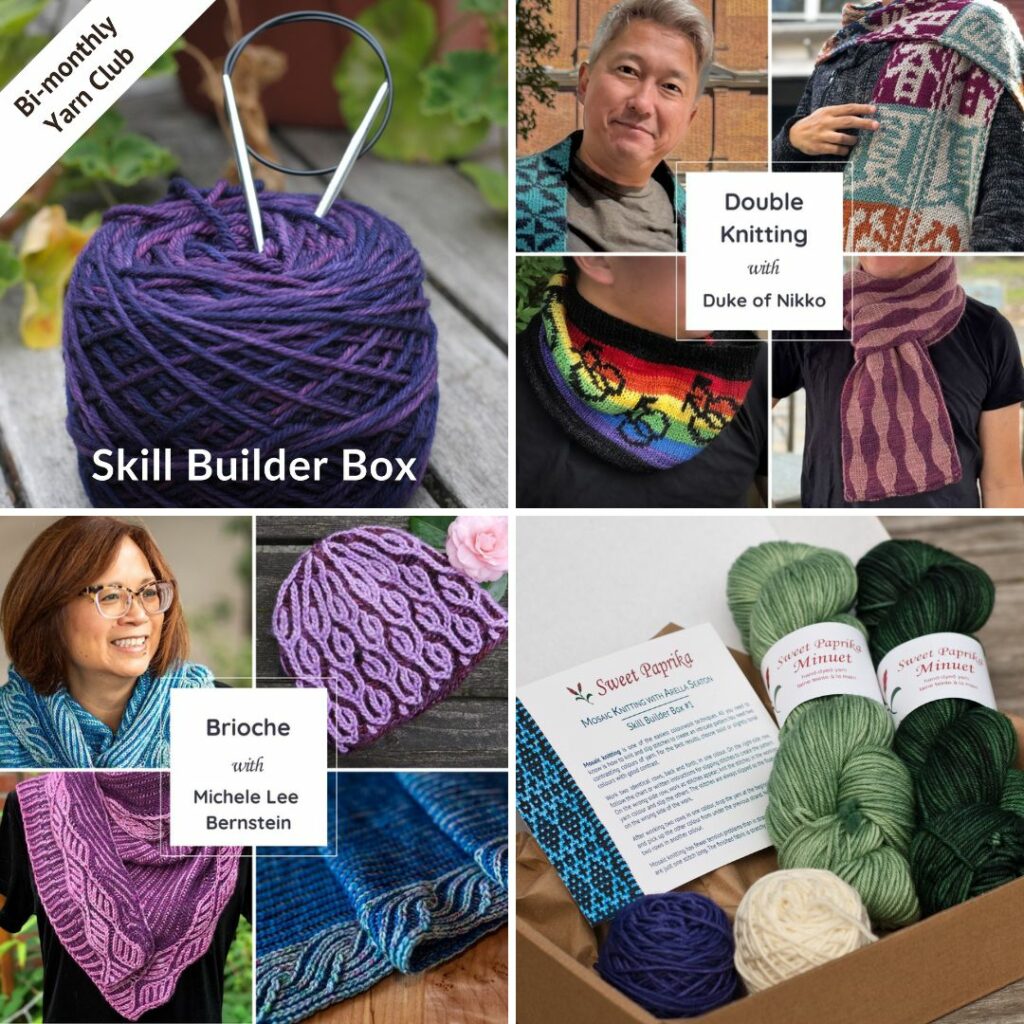
Two of our featured techniques and designers and an example of what each Skill Builder box will look like.

Q3) What are some new and upcoming things our membership should be on the lookout for at your shop?

We just launched a new yarn club! Our bi-monthly Skill Builder Box yarn club focuses on a different knitting technique with each box, from mosaic knitting to steeking to brioche. For this club we’re collaborating with some of our favourite designers to create new patterns showcasing the techniques we’ll be exploring. Each box includes hand-dyed yarn, photo and video tutorials, and an exclusive pattern from our featured designer.

We really enjoy creating educational yarn clubs that combine beautiful yarn with the opportunity to deepen your knowledge. With this new club we’re excited to help people develop their skills and dive into things that might seem intimidating by making them approachable.

We’re also excited about an upcoming collaboration with designer Nidhi Kansal who’s creating a new pattern for our Grazioso yarn. Grazioso is a lovely silk and linen blend, and it’s one of our favourite yarns for summer. We’re planning a big Grazioso restock in early June to coincide with Nidhi’s pattern release.

Grazioso silk and linen hand-dyed yarn

Q4) How does your community contribute to your business?

Our community has always been an important aspect of our business. In the early days we held knitting teas in our living room and eventually outgrew that and switched to organizing meetups around the city of Montreal. Since Covid we’ve hosted monthly knitting teas on Zoom which has expanded our community in geographic terms!

With all the changes and challenges of social media, we’ve moved to hosting our Sweet Paprika online community on the Mighty Networks platform (no algorithm and no ads!). We’ve got a nice group going, so feel free to join us if you’d like to share what you’re working on, ask for advice, share tips and chat with crafty friends.

And of course, we always enjoy connecting in-person too and are looking forward to Knit City Montreal this year where we’ll be vending in the marketplace!


Q5) What project are you dreaming about doing next?

I’m itching to cast on Cuslett which Jennifer Beale designed for our Elora yarn. I adore Jennifer’s designs and loved knitting her La Manche cardigan which I wear all the time.

Elizabeth wearing her La Manche sweater designed by Jennifer Beale and knit in Sweet Paprika Norwood.